I want to talk to you straight about what happened on November 3.
You have probably heard it called a blue wave. Democrats picked up ten seats in the state House, and the headlines wrote themselves. I have spent the last two weeks going through the returns, the ballot files and every campaign finance report I could get my hands on. The numbers tell a different story than the headlines, and they also give us real reasons for hope.
What happened
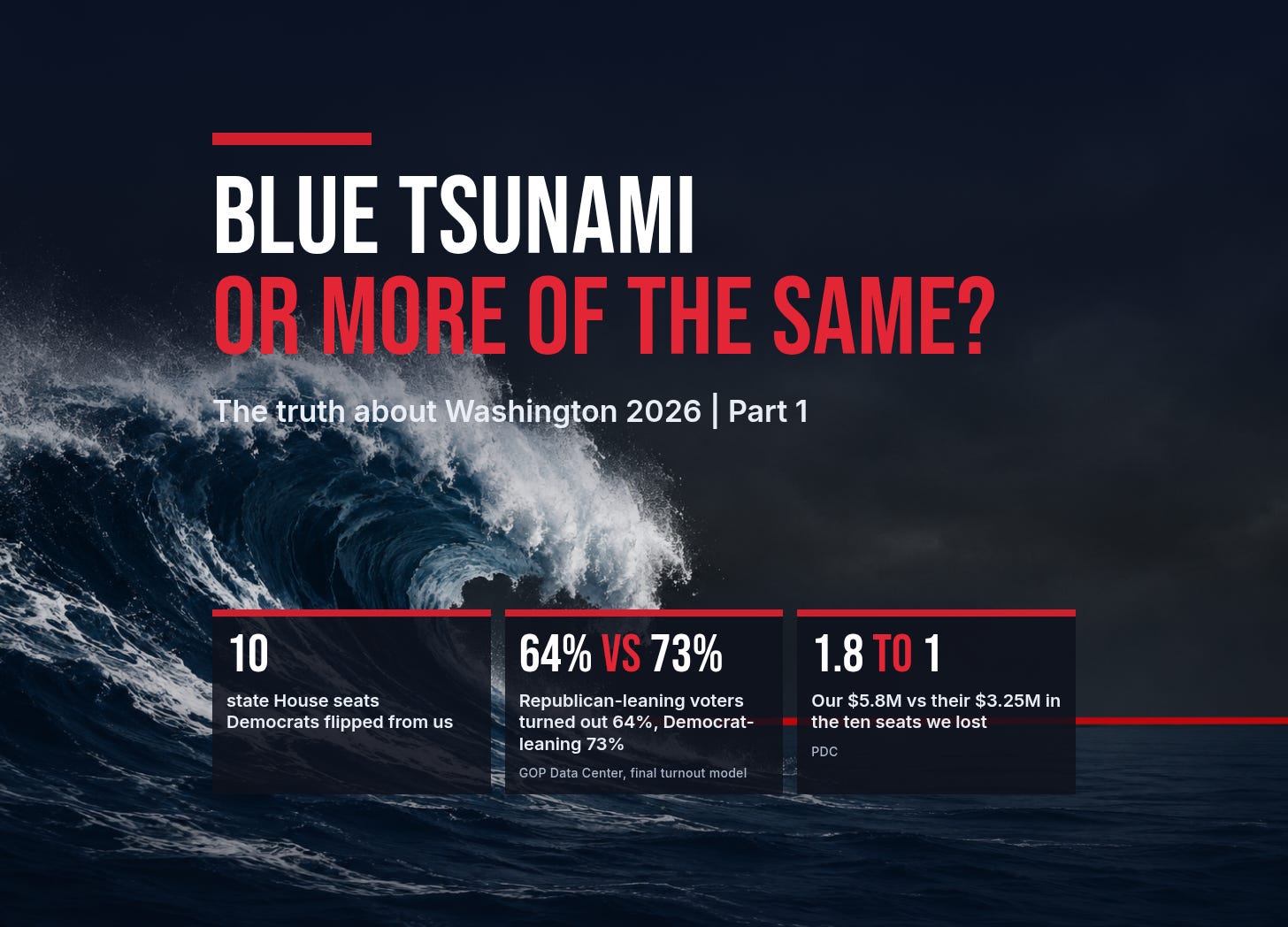
Republicans went into this election holding 39 seats in the state House. We came out with 29. Ten seats flipped from Republican to Democrat. Not one seat flipped our way.
The seats we lost: LD12 Position 1, both seats in LD14 here in Yakima, both seats in LD17, both in LD18, both in LD25 and LD26 Position 2. LD25 Position 2 is down to 80 votes.
Statewide turnout was 62.65%. A little over 3.2 million of us voted. About 721,800 fewer people voted than in 2024.
And in 38 of the 122 legislative races on the ballot this year, there was no Republican at all. Thirty-eight. You cannot win a race you do not enter.
Who showed up
Here is the part nobody in Olympia wants to say out loud. Our voters stayed home.
In the nine seats we lost where both parties were on the ballot in 2024 and 2026, the Republican vote dropped 25% from 2024. The Democratic vote did not grow. It was down 2%. The tenth, LD17 Position 1, had no Democrat on the ballot in 2024. In every one of those ten seats, the Republican votes we lost from two years ago were more than the margin we lost by. In LD25 Position 2 we lost 11,764 Republican votes from 2024 and we are currently losing the seat by 80 votes.
I wanted every registered voter counted, so we put two party models side by side. Washington has no party registration, so the RNC rates every voter’s party lean one way and the state party rates it another way. I combined them. If both say Republican, or one says Republican and the other says swing, I count that voter as Republican-leaning. Democrats work the same way. If both say swing, the voter is swing. If one says Republican and the other says Democrat, I go with the state party’s model. Nobody is left out.
Republican-leaning voters: 1,563,565 registered. 1,004,434 voted. That is 64.2%.
Democrat-leaning voters: 2,134,550 registered. 1,557,664 voted. That is 73.0%.
Swing voters: 1,892,372 registered. 672,605 voted. That is 35.5%.
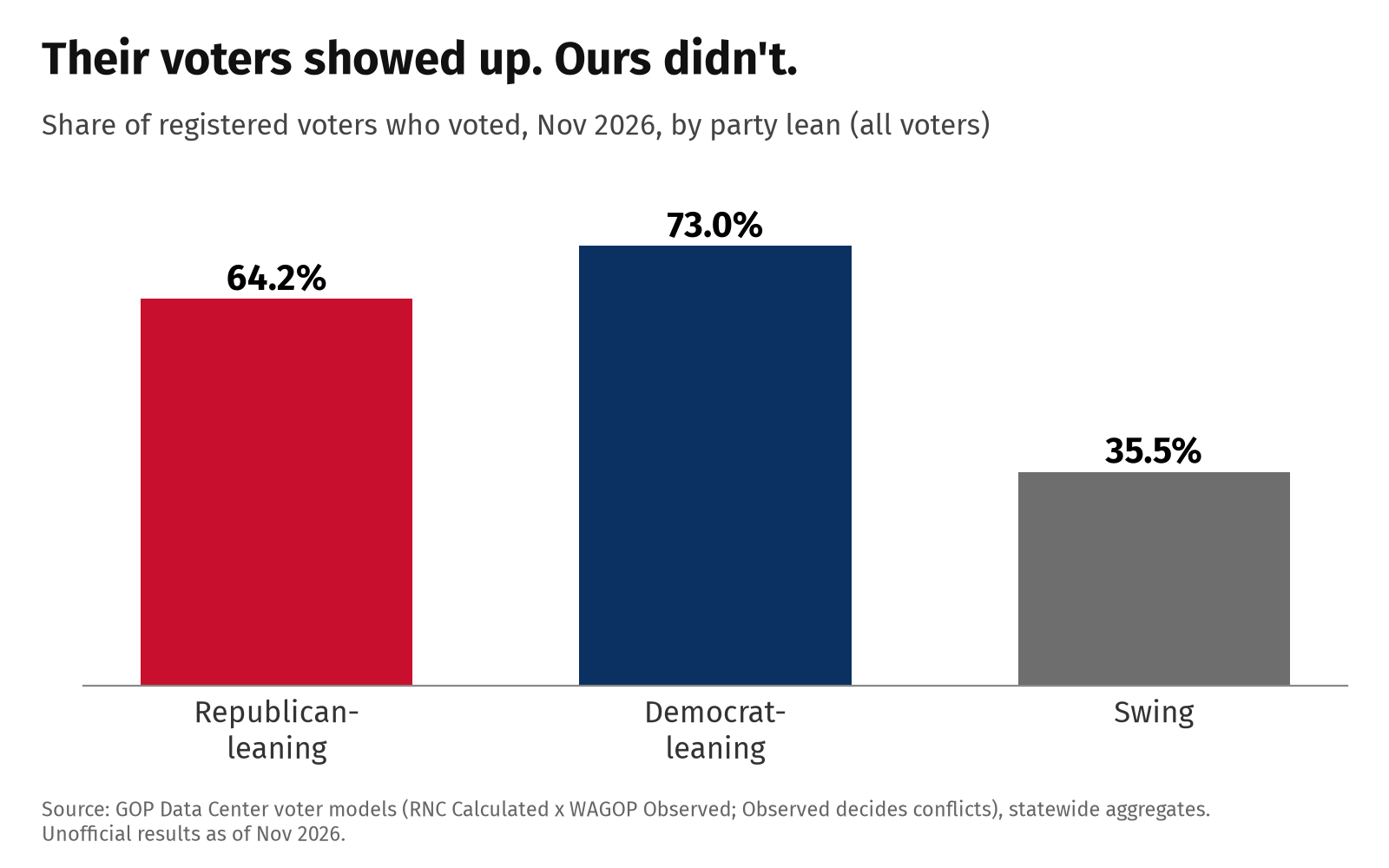
Figure 1. Turnout by party lean, all registered voters, Nov 2026. Republican-leaning 64.2%, Democrat-leaning 73.0%, swing 35.5%.
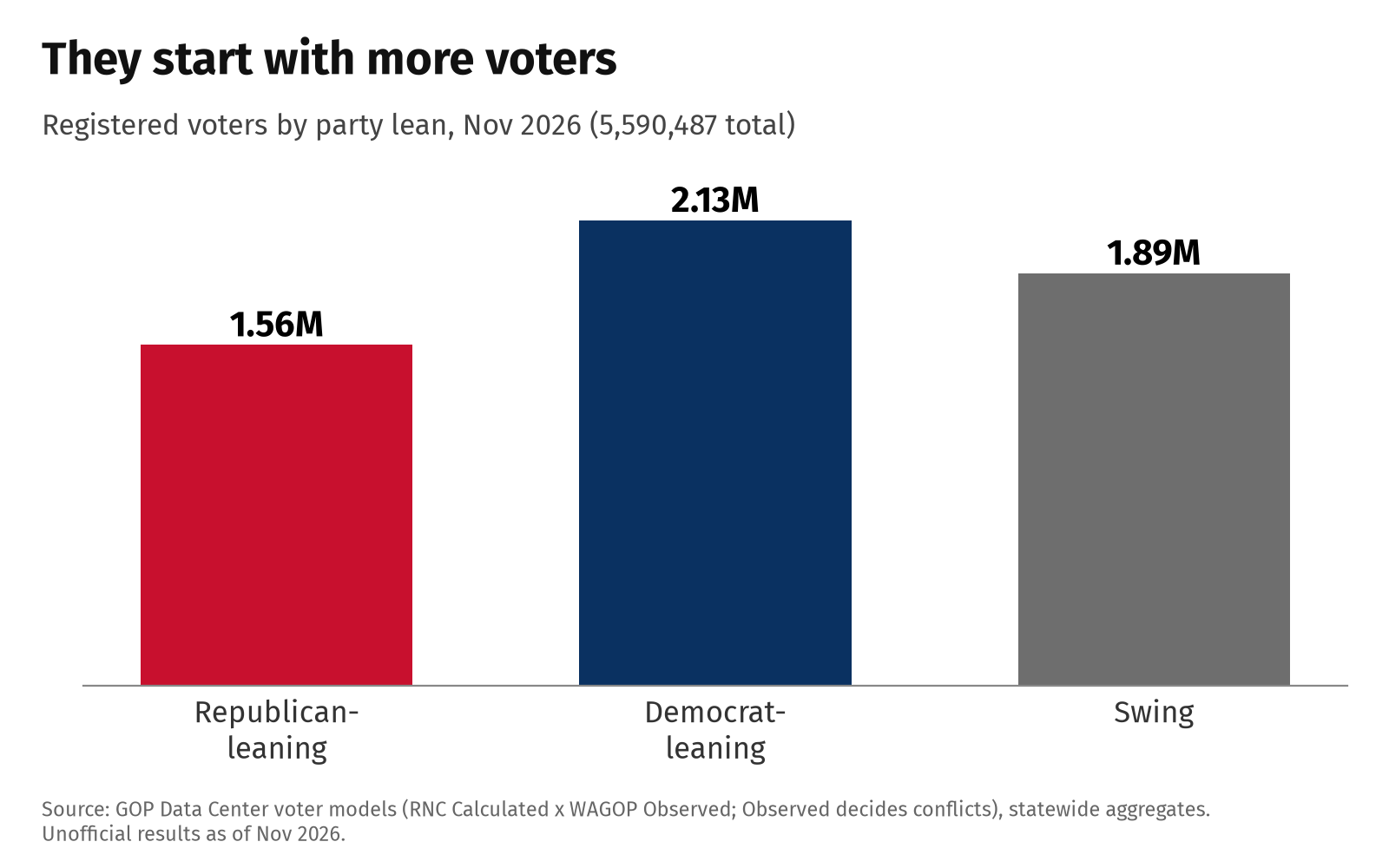
Figure 2. Registered voters by party lean: 1.56 million Republican-leaning, 2.13 million Democrat-leaning, 1.89 million swing.
So they start with more voters, about 1.4 for every one of ours, and on top of that their people turned out nearly 9 points better than ours. Of the 3.23 million ballots counted in these models, 48.2% came from Democrat-leaning voters. Only 31.1% came from ours.
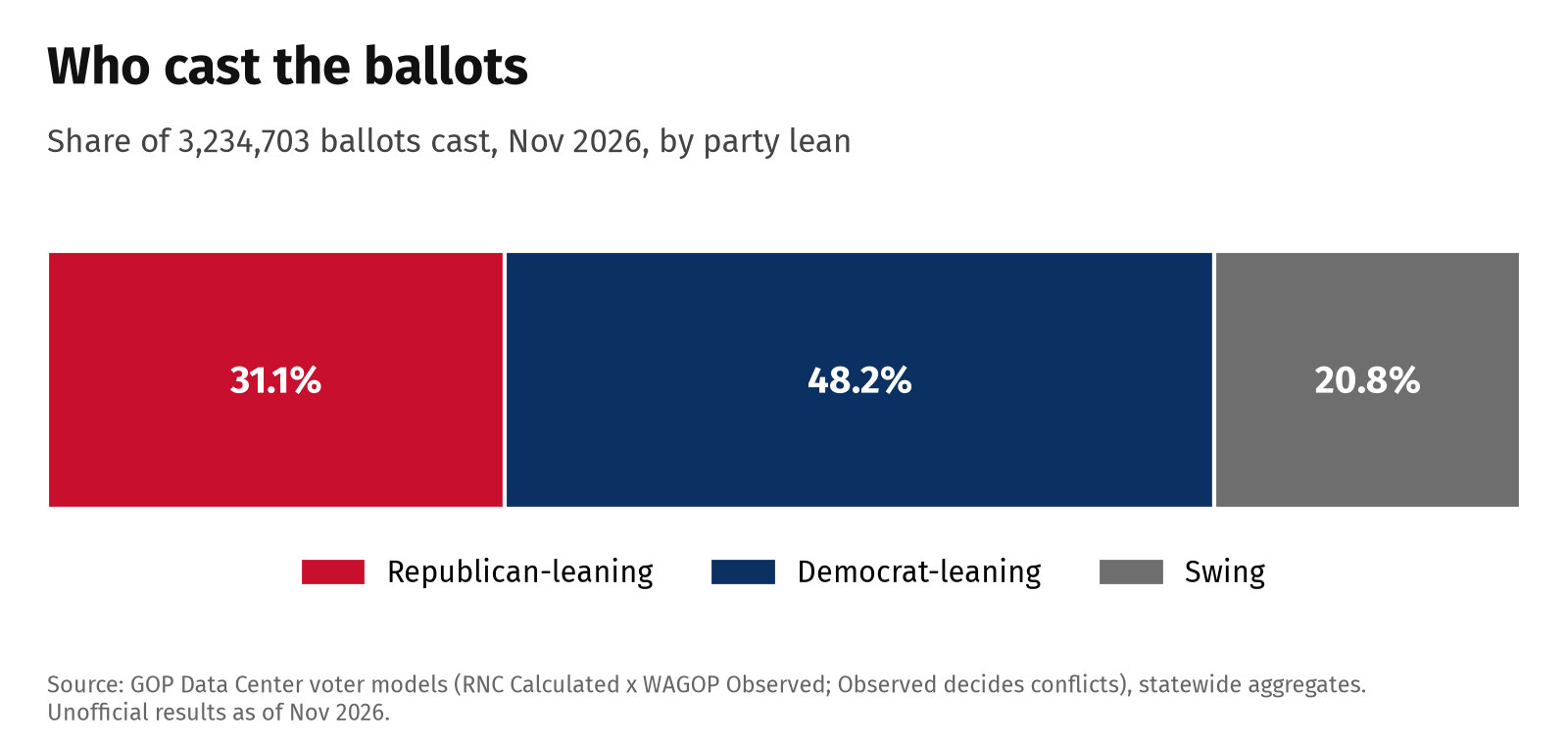
Figure 3. Share of the 3,234,703 ballots cast, by party lean: Republican-leaning 31.1%, Democrat-leaning 48.2%, swing 20.8%.
And it is getting worse. Using the state party’s Observed Party model, the turnout gap between Republican-leaning and Democrat-leaning voters grew by about 4 points from 2022 to 2026.
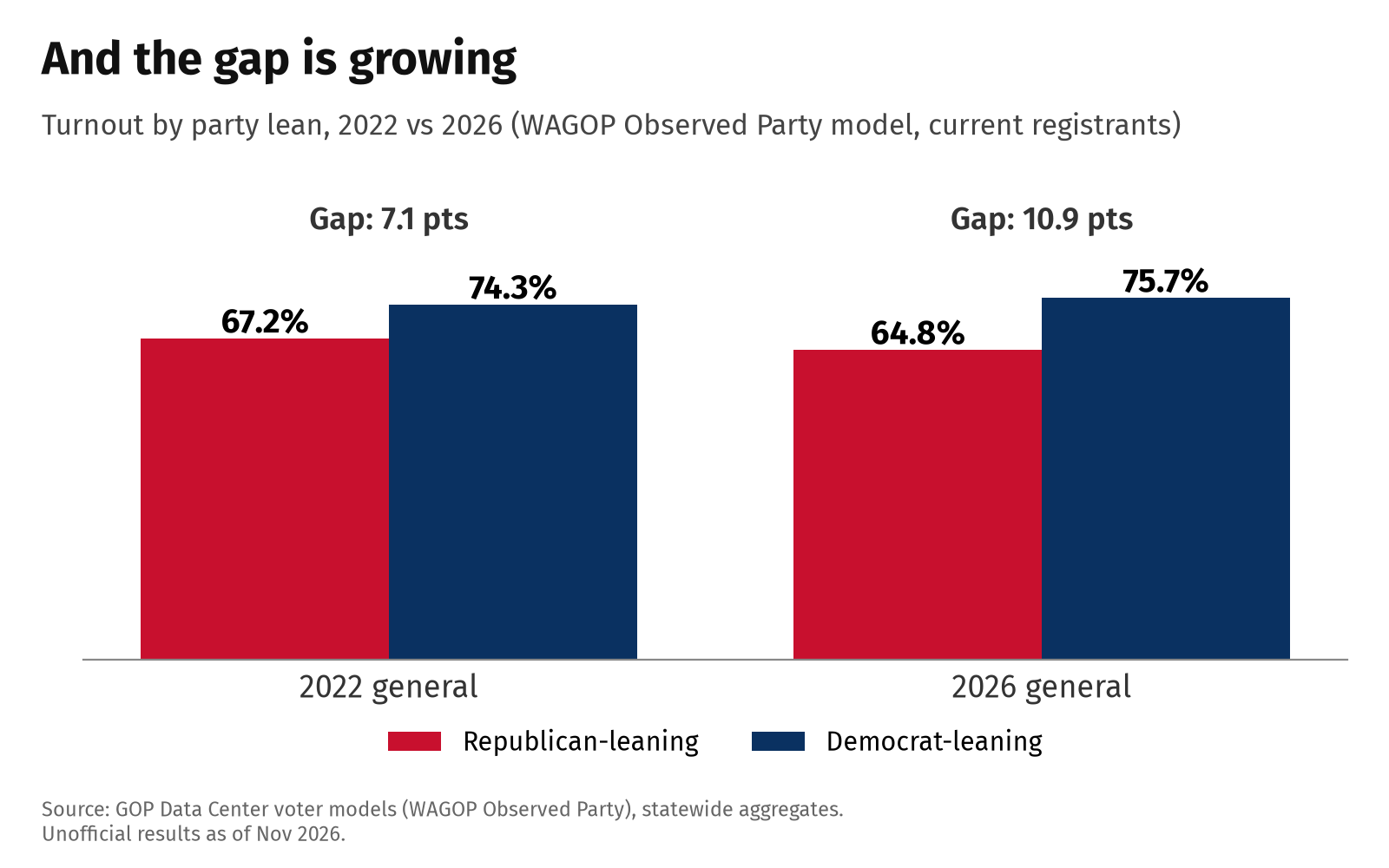
Figure 4. Turnout by party lean in 2022 and 2026 under the state party’s Observed Party model, counting today’s registered voters for both years. The gap went from 7.1 points to 10.9 points.
The RNC’s model shows the gap in every age group:
18 to 25: Republican-leaning voters 39%, Democrat-leaning 44%
26 to 35: 42% vs 51%
36 to 45: 53% vs 65%
46 to 55: 64% vs 72%
56 to 61: 71% vs 77%
62 and older: 80% vs 82%
Look at the people between 26 and 45. Our share of them voted 9 to 12 points less than theirs did. Our seniors came close to matching theirs. Everyone younger left us short.
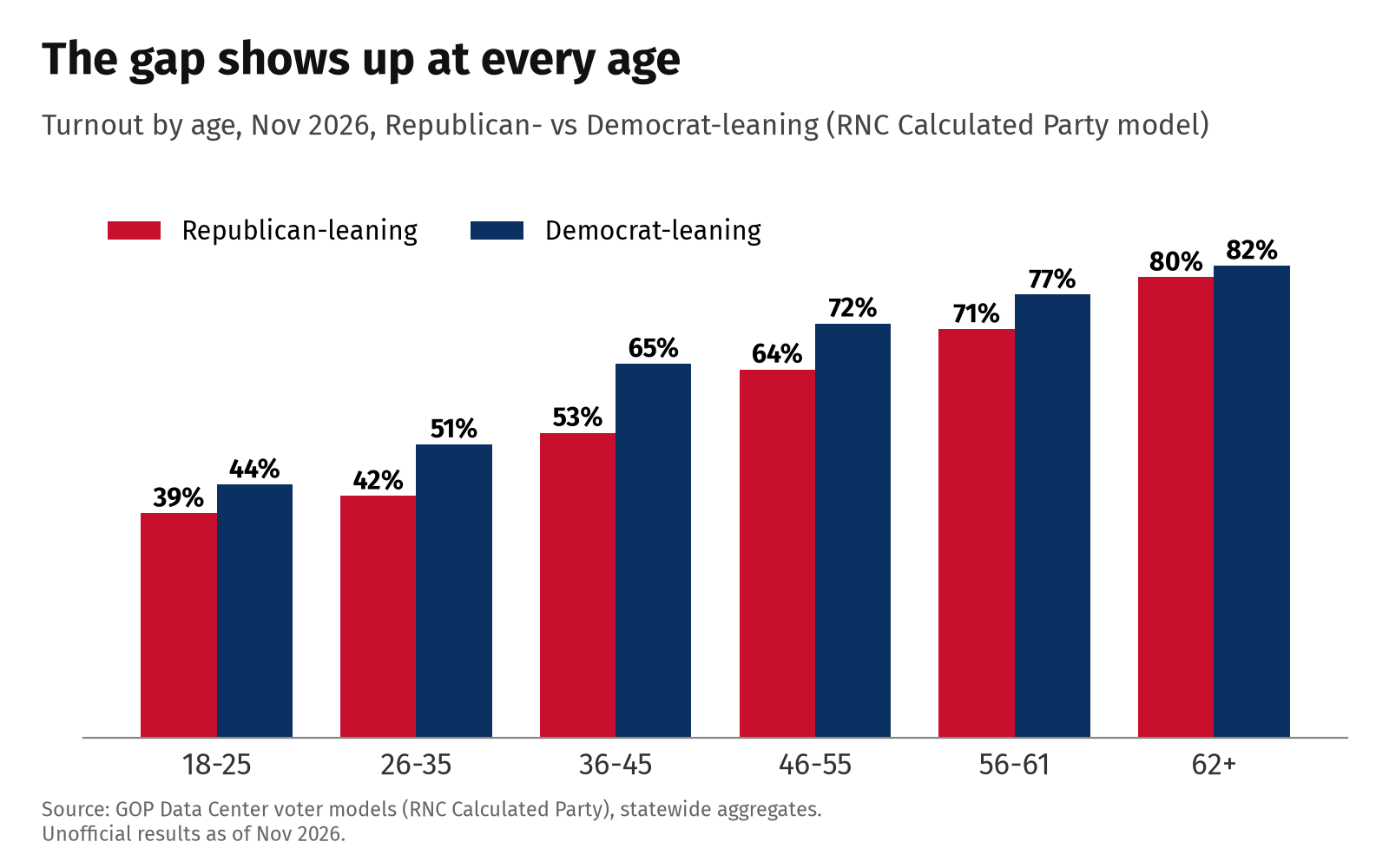
Figure 5. Turnout by age group, Republican-leaning vs Democrat-leaning voters, RNC Calculated Party model.
Then there is everybody in the middle. 1.89 million registered voters, about a third of everyone on the rolls, are people both models call swing. Only 35.5% of them voted, and they still cast 20.8% of all ballots. That is where the next election gets decided.
Follow the money
Some folks will say we lost because we got outspent. We did not.
In the ten seats we lost, the Republican side spent $5.8 million. The Democratic side spent $3.25 million. We outspent them 1.8 to 1. Counting candidate spending and outside money together, our side paid about $20 for every Republican vote in those races. Their side paid under $10 per vote.
After the August primary, Republican campaigns and their allies put $4.4 million into those ten seats. Democrats put in $2.7 million. From the primary to the general, the margin in those seats still moved about 28,700 votes toward the Democrats. To be fair, November voters are younger than August voters, and most seats drift left between the two. But we paid $37 for every vote we added after the primary. They paid under $19.
Now look at the caucus and party committees, the groups that exist to elect Republicans to the Legislature. In 2026 they put $7.0 million into specific legislative races. $5.96 million of it, about 85%, went to races we lost. The Democratic caucus and party committees spent $2.79 million, and $2.31 million of that went to races they won.
Fix Washington spent $2.13 million, and $2.08 million of it went to 14 races we lost. The House Republican caucus committee put $1.19 million of its $1.28 million into 20 losing races. The Senate Republican caucus committee put $882,000 of its $1.05 million into 11 losing races.
This has happened before. In 2022, $8.02 million of the $8.87 million these committees tied to legislative races went to races we lost.
Here in Yakima, in LD14 Position 2, Republican committees spent $38 for every Republican vote cast. We lost by 4,820.
The consultants
Every donor in this state deserves an answer to one question. Who got paid?
I am talking about consultants here: the firms that plan campaigns, make and place the ads, run the mail programs, the texting and the door knocking. I left out print shops, sign makers, mail houses and postage. Printers do a job and get paid for paper and ink. They are not the ones making the calls.
In 2026, consultants on our side were paid $6.82 million in the 26 races we lost where a consultant was paid. That works out to about $262,000 per race. In the 32 races we won where a consultant was paid, they got $1.60 million, or about $50,000 per race. We paid more than five times as much per race to lose as we did to win. The ten Republican seats that Democrats flipped from us took $4.25 million by themselves, about $425,000 a seat.
That is only the money tied to a November race. Republicans who lost in the August primary paid consultants another $580,000, and our legislative caucus committees paid $858,000 more for work that names no race. All told, consultants were paid $9.86 million by Republican legislative campaigns and caucus committees this year.
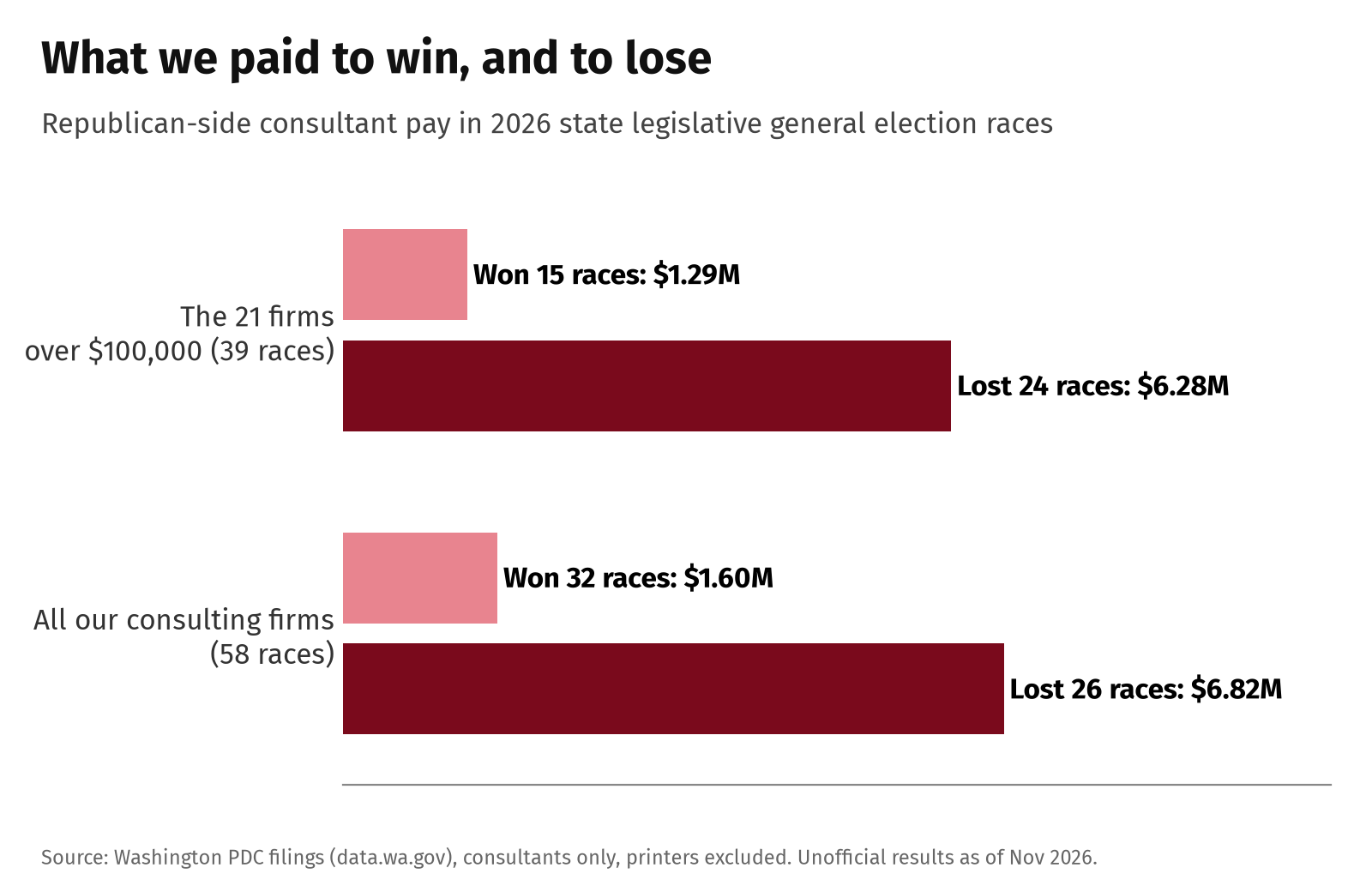
Figure 6. Consultant pay per race: about $50,000 per race we won, $262,000 per race we lost, and $425,000 per Republican-held seat that Democrats flipped from us.
Here is every consulting firm paid more than $100,000 of that $9.86 million this year, from the public filings, with who runs it. Races won and lost count only this year’s races. Where a firm helped Republicans win in 2026, I name the seat.
Push Digital (Charleston, South Carolina; owned by Scott Howell): paid $1.17 million in 2026 on 8 races this year (won 0, lost 8); $1.17 million total since 2020.
Mentzer Media Services (Maryland; Angela McCann and Beth Beall): paid $1.02 million in 2026 on 2 races this year (won 1, lost 1); $1.02 million total since 2020. The win was Drew MacEwen’s LD35 Senate seat.
MHB Media (Arlington, Virginia; no owner listed in public records): paid $745,000 in 2026 on 1 race this year (won 0, lost 1); $745,000 total since 2020.
Strategic Impact (Lexington, Kentucky; Brad Shattuck): paid $669,000 in 2026 on 8 races this year (won 1, lost 7); $669,000 total since 2020. The win was LD35 Senate.
Echo Canyon Consulting (Phoenix and Alexandria, Virginia; Jon Seaton, Ryan Price and Matt Kenney): paid $669,000 in 2026 on 8 races this year (won 1, lost 7); $1.26 million total since 2020. The win was LD4 Position 1.
ColdSpark (Pittsburgh; Mark Harris and Mike DeVanney): paid $506,000 in 2026 on 12 races this year (won 3, lost 9); $506,000 total since 2020. Wins: Nikki Torres in LD8 Senate, Mike Steele in LD12 and Skyler Rude in LD16.
Prometheus Digital (Wyoming address; Kevin Carns, director): paid $472,000 in 2026 on 11 races this year (won 4, lost 7); $472,000 total since 2020. Wins: LD35 Senate, Mike Steele in LD12 Position 2, and Dan Griffey and Travis Couture in LD35.
Prologue Digital (Kent; Doug and Lori Basler): paid $384,000 in 2026 on 9 races this year (won 0, lost 9); $981,000 total since 2020.
Rock Chalk Strategies (Christine Malchow of Sammamish): paid $383,000 in 2026 on 7 races this year (won 3, lost 4); $383,000 total since 2020. Wins: LD35 Senate, Mike Steele in LD12, and LD13 Position 2.
Right Target Media (Chevy Chase, Maryland; no owner listed in public records): paid $300,000 in 2026 on 2 races this year (won 0, lost 2); $300,000 total since 2020.
Mudshare (New Jersey; founded by David Cerrone, owned by Lionfield Capital since 2023): paid $281,000 in 2026 on 10 races this year (won 0, lost 10); $327,000 total since 2020.
DMM Media (Alexandria, Virginia; Mike McElwain): paid $264,000 in 2026 on 1 race this year (won 0, lost 1); $2.02 million total since 2020.
Hype Strategies (Camas; Evan Ridley): paid $252,000 in 2026 on 7 races this year (won 0, lost 7); $252,000 total since 2020.
Minnick Group (Chad and Julie Minnick, Bothell): paid $225,000 in 2026 on 5 races this year (won 1, lost 4); more than $5 million total since 2020. The win was Chris Corry in LD15 Position 1.
Frontline Strategies (Utah; Mike Hahn, president of digital): paid $185,000 in 2026 on 4 races this year (won 0, lost 4); $185,000 total since 2020.
Apex Canvassing & Consulting (Guffey, Colorado; no owner listed in public records): paid $146,000 in 2026 on 4 races this year (won 0, lost 4); $146,000 total since 2020.
H2H Strategies (Onondaga, Michigan): paid $134,000 in 2026 on 4 races this year (won 2, lost 2); $134,000 total since 2020. Wins: Jonathan Bingle in LD6 Position 2 and Steve Ewing in LD39 Position 2.
Deep Root Analytics (Arlington, Virginia; partners Sara Fagen, Brent Seaborn and Michael Meyers): paid $133,000 in 2026 by our caucus committees for research and a survey that name no race, so it has no races won or lost this year; $133,000 total since 2020.
The Silver Agency (Chehalis; Chad and Coralee Taylor): paid $128,000 in 2026 on 5 races this year (won 1, lost 4); $187,000 total since 2020. The win was Peter Abbarno in LD20 Position 1.
SOLVD (Bellingham): paid $107,000 in 2026 on 7 races this year (won 4, lost 3); $273,000 total since 2020. Wins: Steve Ewing and Sam Low in LD39, Joshua Penner in LD31 and Dan Griffey in LD35.
First Tuesday Consulting (Yakima; no owner listed in the filings): paid $100,000 in 2026 on 4 races this year (won 2, lost 2); $179,000 total since 2020. Wins: Senator Jeremie Dufault in LD15 and Chris Corry in LD15 Position 1. The two losses were both LD14 House seats here in Yakima.
Those 21 firms took $8.26 million this year. $6.21 million of it, about 75%, went to firms based outside Washington: South Carolina, Maryland, Virginia, Kentucky, Arizona, Pennsylvania, New Jersey, Utah, Michigan and Colorado.
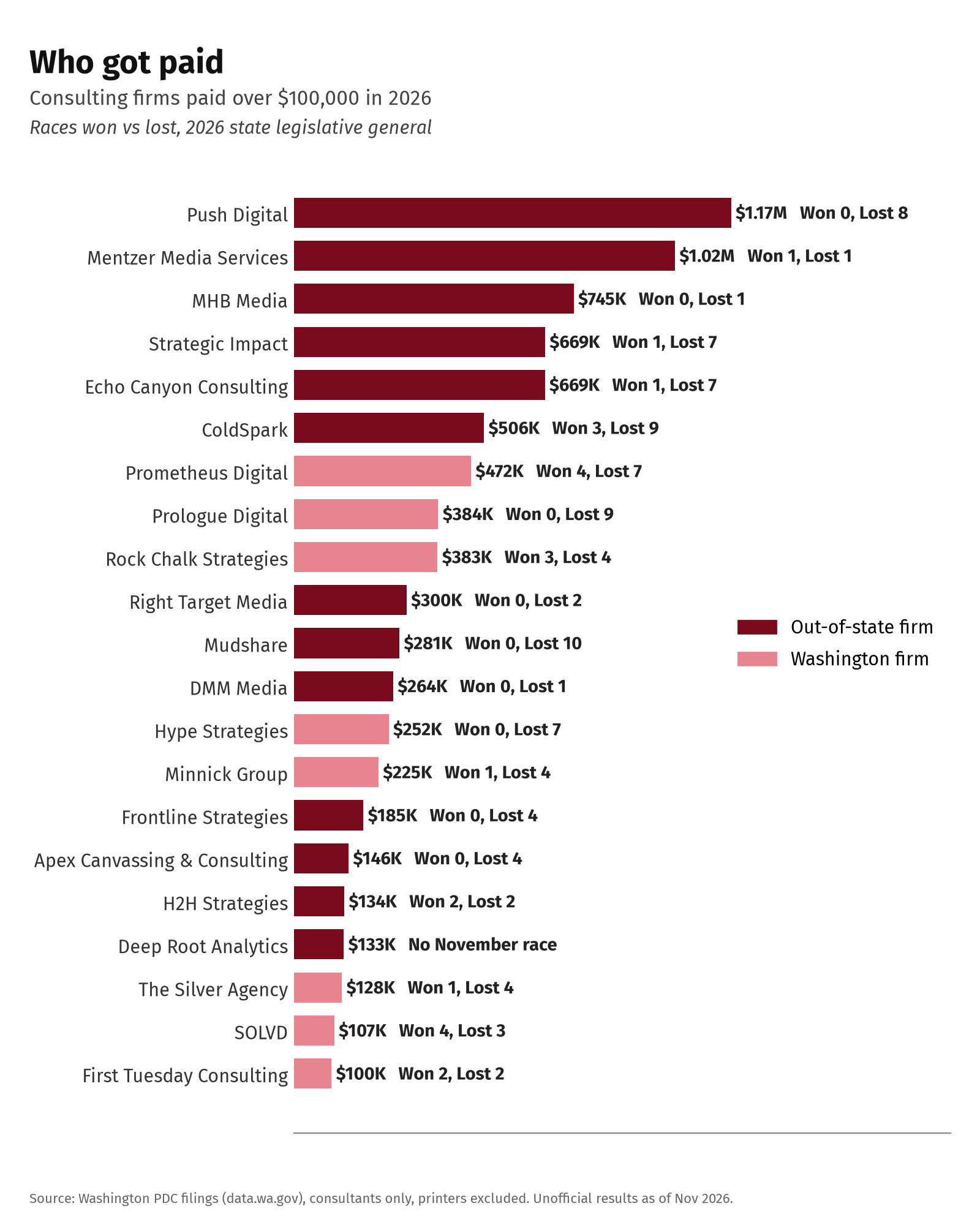
Figure 7. The 21 consulting firms paid more than $100,000 in 2026, with the number of 2026 state legislative general election races each firm won and lost. Deep Root Analytics was paid for work that names no race.
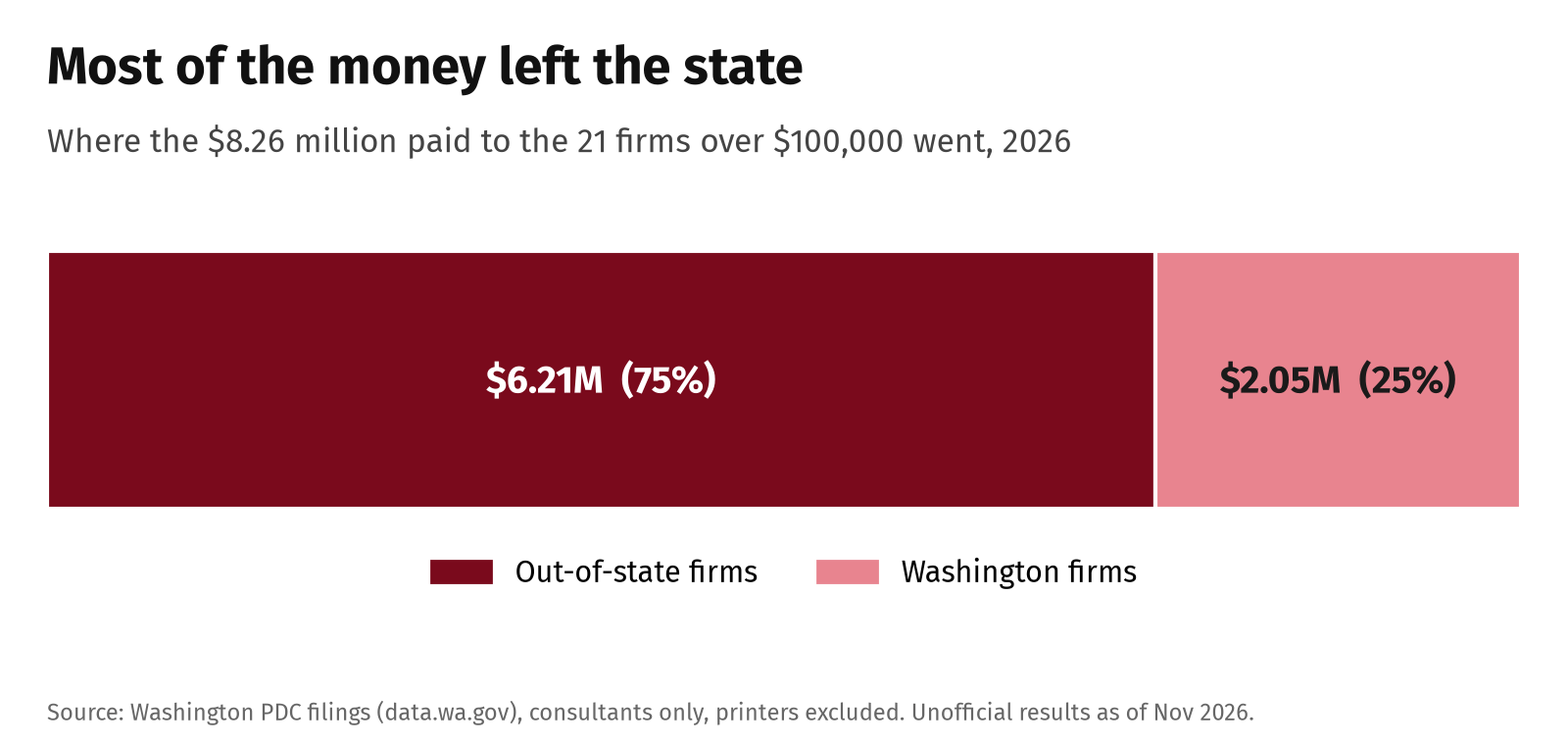
Figure 8. Of the $8.26 million paid to those 21 firms, $6.21 million (75%) went to firms based outside Washington.
All together, these 21 firms were paid $8.26 million. Between them they worked 39 November races. We won 15 of those races and lost 24. $6.28 million of their pay went into the races we lost and $1.29 million into the races we won. The rest came from primary campaigns and caucus work that names no race.
Count every consulting firm on our side, not just the big ones, and the money still piled up on the losing side. Consulting firms were paid in 58 November races. We won 32 and lost 26. $6.82 million went into the races we lost and $1.60 million into the races we won.
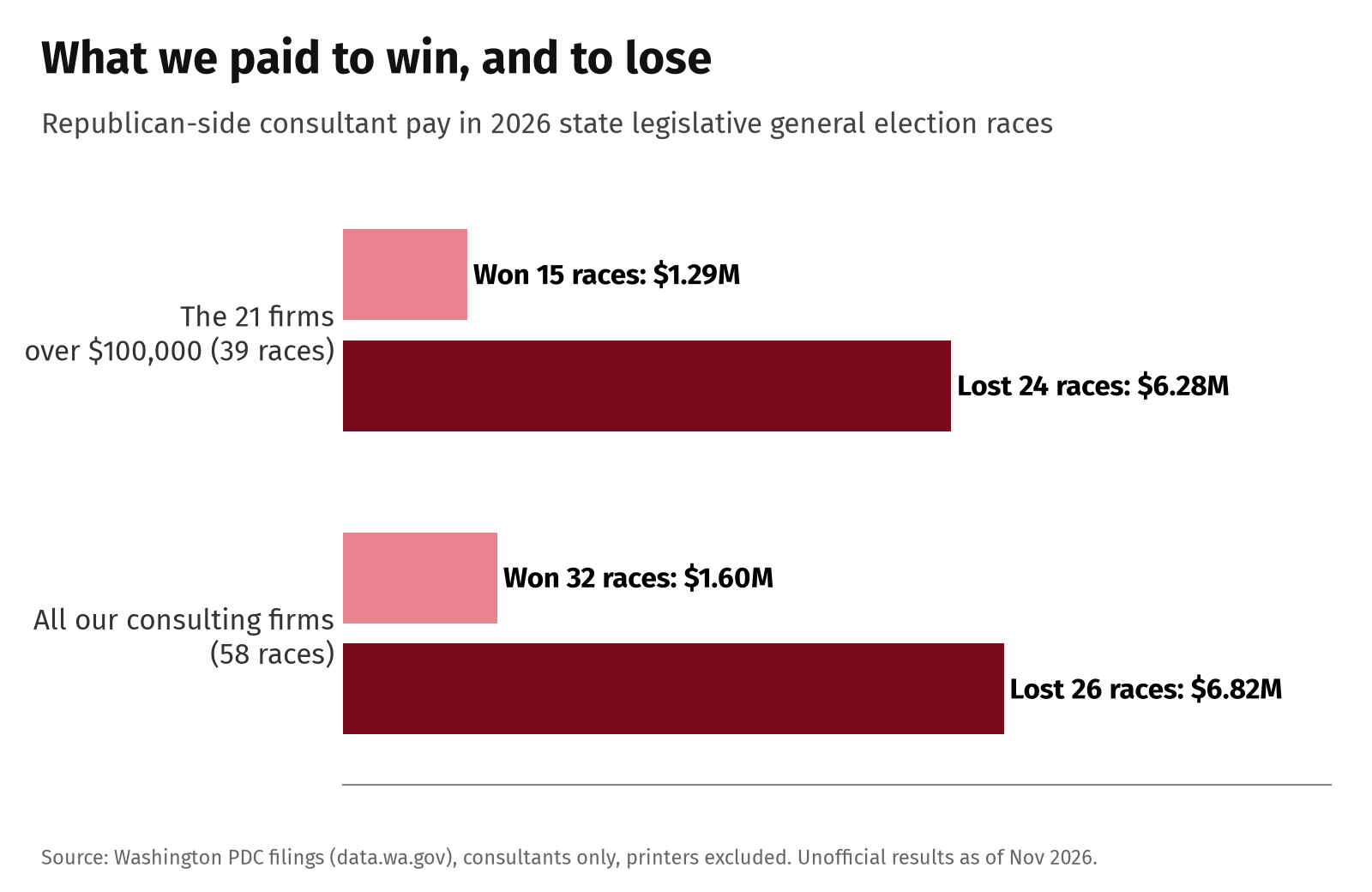
Figure 9. Consultant pay in 2026 November state legislative races, by races won and lost. Each race is counted once, even when several firms worked it.
Those 21 firms are not the whole list. Our side paid 98 other consulting firms in these races, $1.59 million in all. Every one of them is in a table at the end of this piece, with the races each one won and lost.
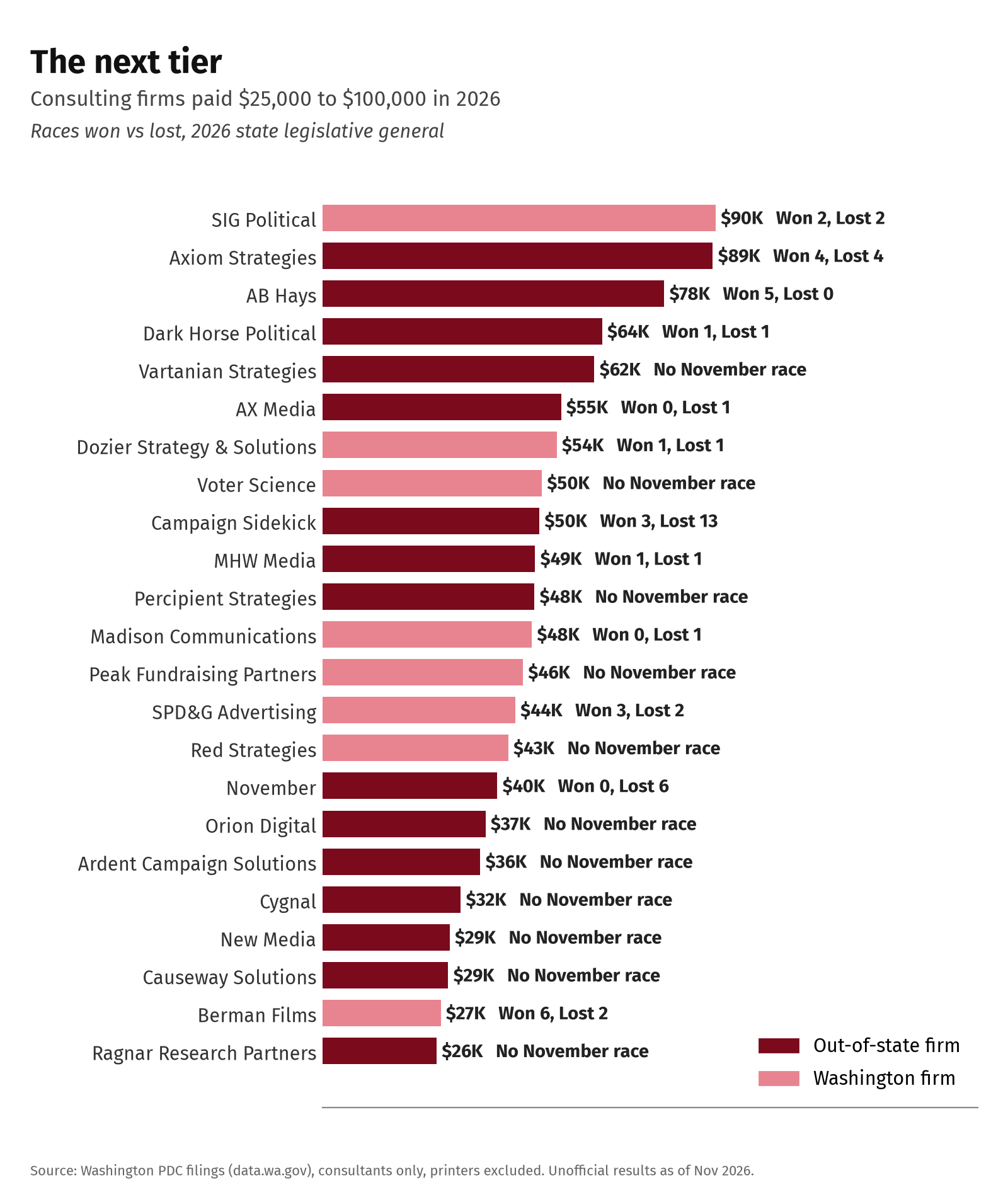
Figure 10. Consulting firms paid $25,000 to $100,000 in 2026, with races won and lost. “No November race” means the firm was paid only by primary campaigns, or by caucus committees for work that names no race.
I want to be fair about this. “Paid” includes airtime and ad buys, so it is what these firms were paid, not what they kept. Money goes to the close races, and close races are the ones you can lose. Nobody here is accused of doing anything wrong. But when the same kind of spending keeps producing the same kind of result, the people writing the checks should start asking harder questions.
The lobbyists
The same circle that hires the consultants also takes a lot of money from the people who lobby Olympia.
For the 2026 election cycle, companies, tribes and trade groups that hired registered lobbyists, along with their PACs and a few lobbying firms, gave at least $4.1 million to our side. That counts the Senate and House Republican caucus committees, The Leadership Council, the Evergreen Leadership Fund and Republican legislative candidates. It is about 21% of the $19.2 million they reported raising. At The Leadership Council it was 39%. At the Evergreen Leadership Fund it was 31%.
The biggest of those givers were Sabey Corporation ($246,600), Amazon ($195,600), the Building Industry Association of Washington ($183,500), the Washington Hospitality Association and its PAC ($173,000), Premera Blue Cross ($156,600), Delta Dental ($156,000), the Puyallup Tribe ($153,200) and the Muckleshoot Tribe ($151,600).
Lobbying is big business in its own right. Registered lobbyists reported $89.5 million in pay in 2025. The top firm, Gordon Thomas Honeywell Governmental Affairs, reported $4.0 million.
Giving is legal, and all of it is reported. Lobbyists and their clients have every right to take part. But when the same donors, the same firms and the same consultants show up every cycle, nobody should be surprised when we get the same results.
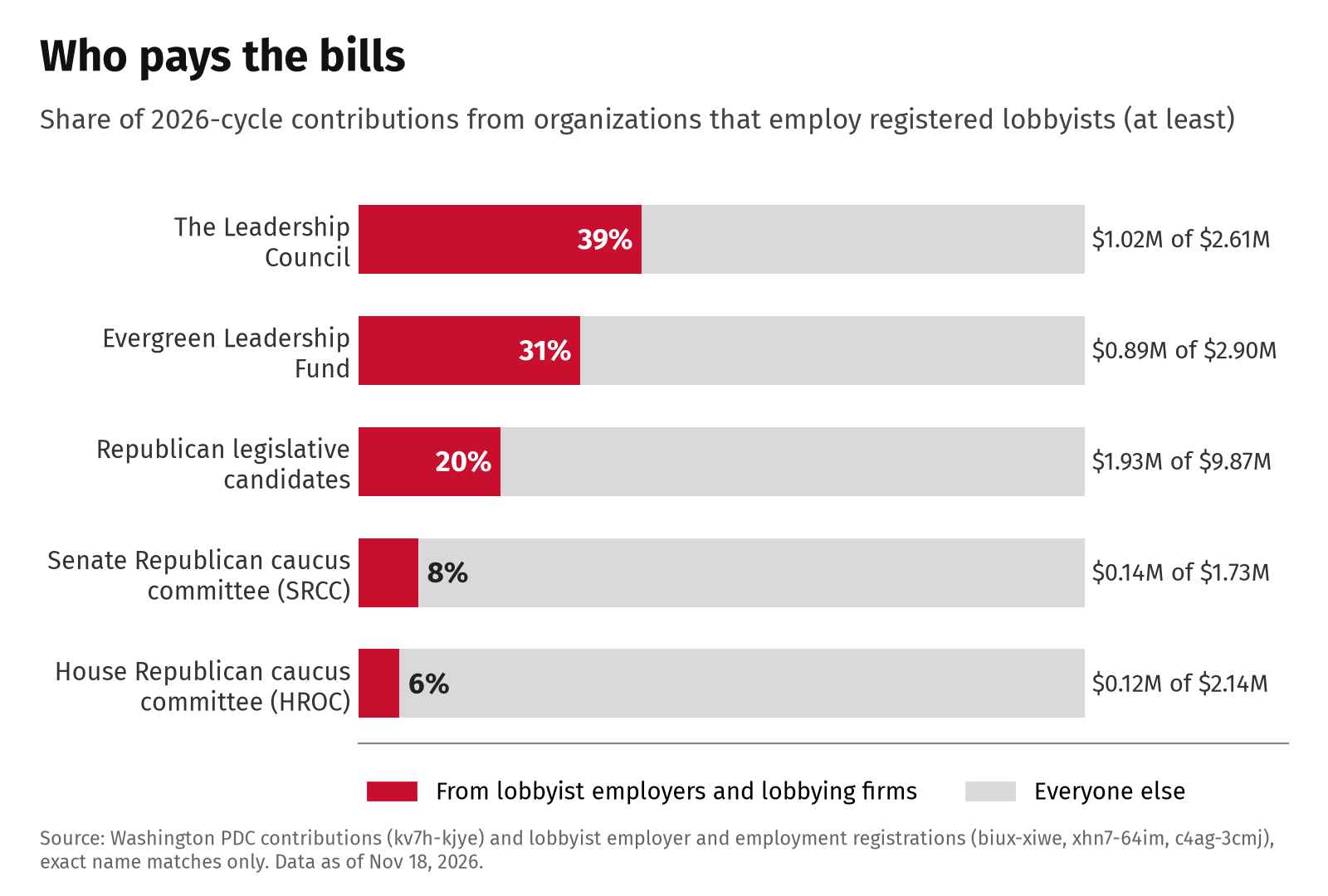
Figure 11. Share of 2026-cycle contributions to Republican caucus committees, allied legislative committees and Republican legislative candidates that came from organizations registered as employing lobbyists, their PACs and lobbying firms. Exact name matches only, so these are floor figures.
Where there is hope
Now the good news, and I mean it.
Washington agrees with us more than the seat count shows. The girls’ sports measure passed with 56% and 1,774,162 votes. It carried 35 of 39 counties, and it passed in Western Washington too. The parents’ rights measure came up short statewide, but it carried 30 of 39 counties. Those are people who already share our values. Most of them just were not voting for our candidates, or were not voting at all.
Young voters are up for grabs. Both party models rate most young voters as swing, not Democrat. There are 1.11 million swing voters in this state under 36, and only 36% of them voted. Nobody owns them.
We are still in the fight. Drew MacEwen is holding LD35 Senate by 333 votes. LD25 Position 2 is down to 80 votes with about 221 curable ballots left in the district. Every ballot that gets cured matters there.
The good news
Republicans had a rough night in the Legislature. They had a much better night in the county courthouses.
On the November 3 ballot, 250 county offices listed a party preference. Candidates who preferred the Republican Party won 152 of them. Democrats won 45. Independents and candidates with no party preference won 53. City, school, and port races are not in this count, because most of them do not list a party. Results are unofficial until certification on November 24.
In 12 counties, including Yakima, Benton, Franklin, and Lewis, every partisan county office on the ballot went Republican. Yakima County Republicans won all eight offices, including auditor, sheriff, prosecutor, and the District 1 commissioner seat.
A few seats changed parties. In Spokane County, Republican Michael Cathcart won the auditor’s office a Democrat had held, 120,012 to 109,902. In Grays Harbor County, Republican Daniel Crawford won prosecuting attorney. In Garfield County, Republican Katie Nagle won treasurer. Democrats also flipped a few Republican-held seats, including the Kitsap County assessor and the Mason County auditor.
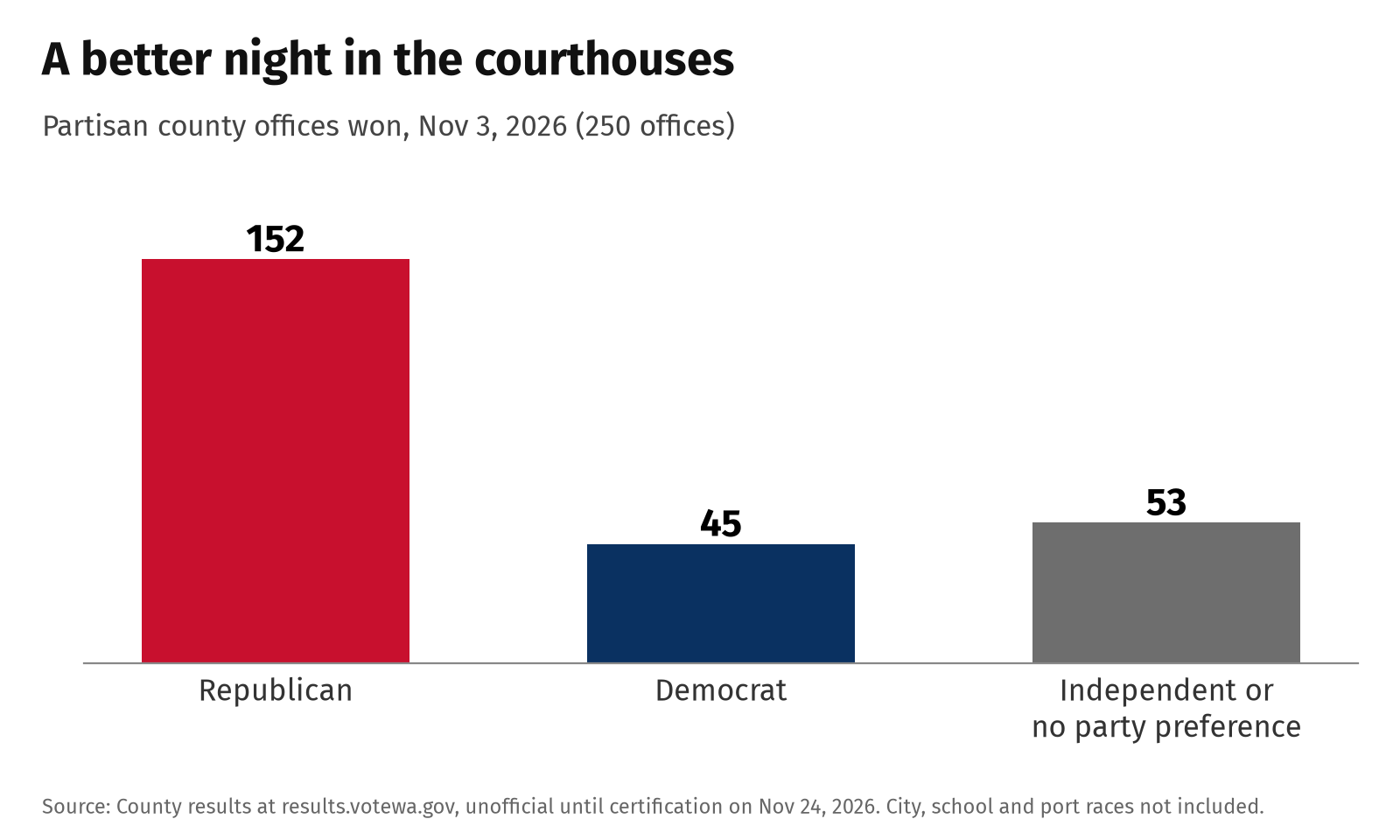
Figure 12. Partisan county offices won on Nov 3, 2026, by the winner’s party preference. Unofficial until certification on Nov 24, 2026.
The path to 2028
In 2028, all 98 state House seats are on the ballot, along with 25 state Senate seats. To take the House we need 21 more seats. To take the Senate we need six. That is a big climb. It is also simple math.
Turnout in a presidential year is a different world. In 2024 it was 78.95%. This year it was 62.65%. The voters we lost this fall show up when the top of the ticket pulls them out. Our job is to get them voting every year.
Here is what I think we do:
Put a Republican on every ballot. Thirty-eight races with no Republican is a choice. In 2028 that number should be zero, it helps overall turnout for statewide projects as well, even if we don’t win.
Turn out our own people first. Our Republican-leaning voters came out at 64.2%. Theirs came out at 73.0%. Close that gap before we spend a dime trying to persuade anyone else.
Go after young swing voters for real. 1.11 million of them, and two out of three stayed home. Show up where they are and help them get their ballots signed and counted.
Stop paying for losses. We paid consultants about $262,000 a race on the ones we lost and $50,000 a race on the ones we won. Donors should ask every committee and every firm for its record before they hand over another check. Hire people who live here and who answer to the voters here.
Same people, same results
People want to play the blame game. A lot of them want to point fingers at the state party. The filings tell a different story.
Of the $9.86 million our side paid consultants this year, $5.34 million, about 54%, came from the caucus committees and the committees allied with them: WA Wins, Fix Washington, The Leadership Council, the Evergreen Leadership Fund, the SRCC and HROC. Candidate campaigns paid $3.17 million, about 32%. Other independent-expenditure committees paid $1.34 million, about 14%. The state party paid $5,000. That is one twentieth of one percent. Even if you add the state party’s consultant payments that name no race, it comes to $69,000, well under 1%.
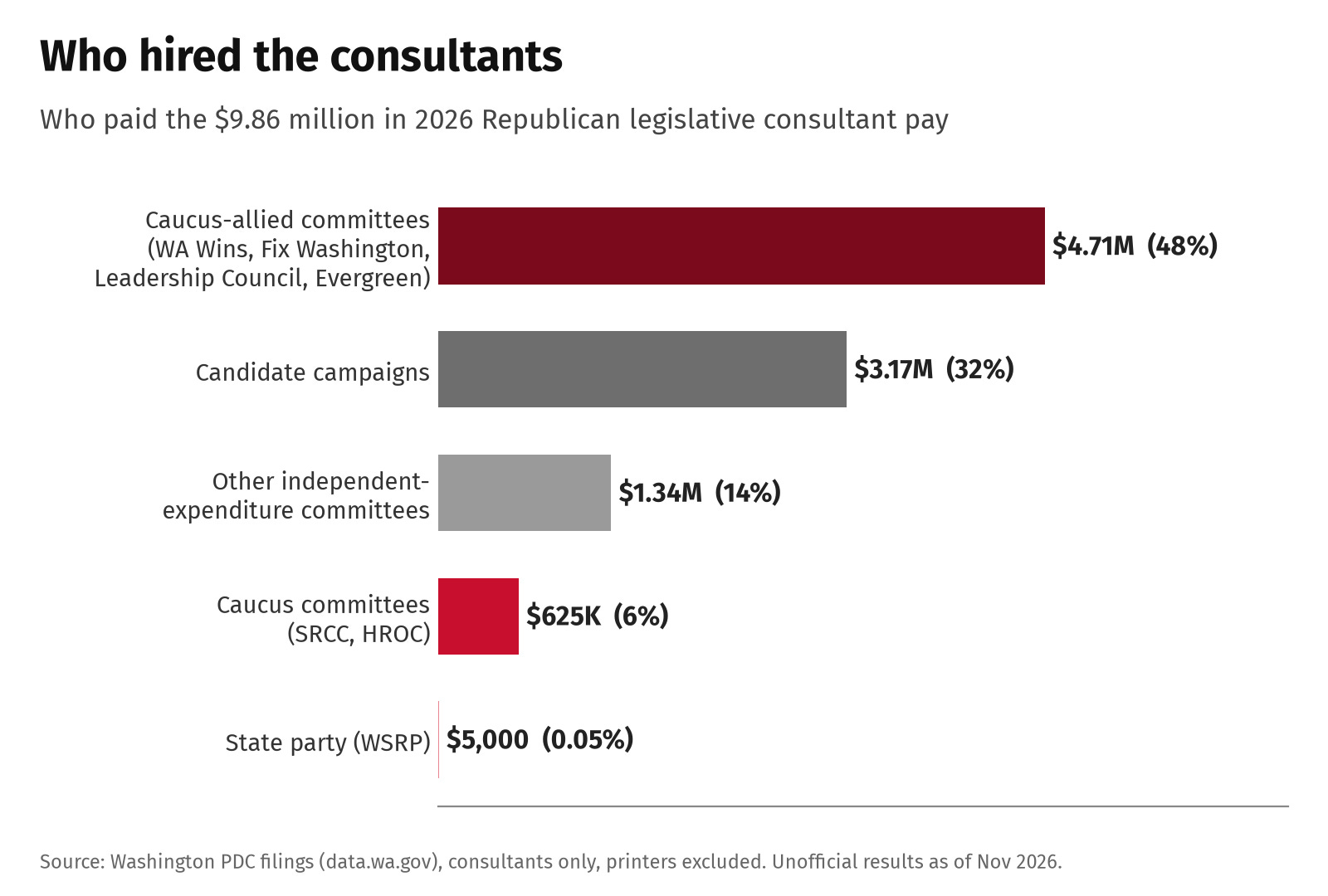
Figure 13. Who paid the $9.86 million in 2026 Republican legislative consultant pay, by type of payer.
So let’s stop pointing fingers at each other. The state party did not decide how these dollars were spent. It doesn’t matter who the state chair is. It doesn’t matter who runs political operations for the state party. What matters is that the way our money is being spent is not winning us elections.
Look at what this year cost us. Our consultants were paid $9.86 million in legislative races, and $6.82 million of it went into races we lost. Democrats flipped ten Republican seats, and those ten seats alone took $4.25 million in consultant pay. Three out of every four dollars paid to the biggest firms went out of state. And we got the same result we got last time.
The consultants got paid either way. Win or lose, the checks cleared. Meanwhile, Washingtonians are broke, taxed out of their homes, and living on the streets. Nobody in the consultant world has to worry about that, especially if they are living outside of WA. The family in Yakima doing the math on rent and groceries cannot.
Until we make drastic changes in how our money is spent, what it is spent on, and who is spending it, nothing in Washington is going to change. Here is what I am asking for:
Open bids for consultant work. Every caucus and party contract over $10,000 should go out for bids, with the terms in writing. We do this for government, and non-profits why don’t we operate this way.
Pay tied to results. Pay a fair base fee for the work and the rest when we win. A firm that believes in its plan should be willing to bet on it.
Washington talent first. Hire people who live here, vote here and will still be here after November.
Report the record. After every election, the caucus committees should give donors and precinct committee officers a plain report: who was hired, what each firm was paid, and which races it won and lost.
Show who pays. Every year, the caucuses should publish how much of their money came from organizations that lobby Olympia, so donors and PCOs can see who is paying for what.
Our donors and our PCOs are not an ATM. They knock the doors, they write the checks, and they deserve a say in how their money is spent. This is not one person’s job to fix. It is all of ours.
I want this to be a conversation. If you voted Republican in 2024 and sat this one out, I want to hear why. If you are 25 and nobody from our party ever knocked on your door, that is on us, and I want to fix it.
Washington is still ours to win. A lot of us just did not show up this time. We can reclaim it, and it starts now.
Coming in Part 2
This is Part 1: what happened, who showed up, and where the money went. In Part 2, I will expand on the road map ahead, including how the asks above would work in practice and what it takes to be ready for 2028.
Appendix: every other consulting firm
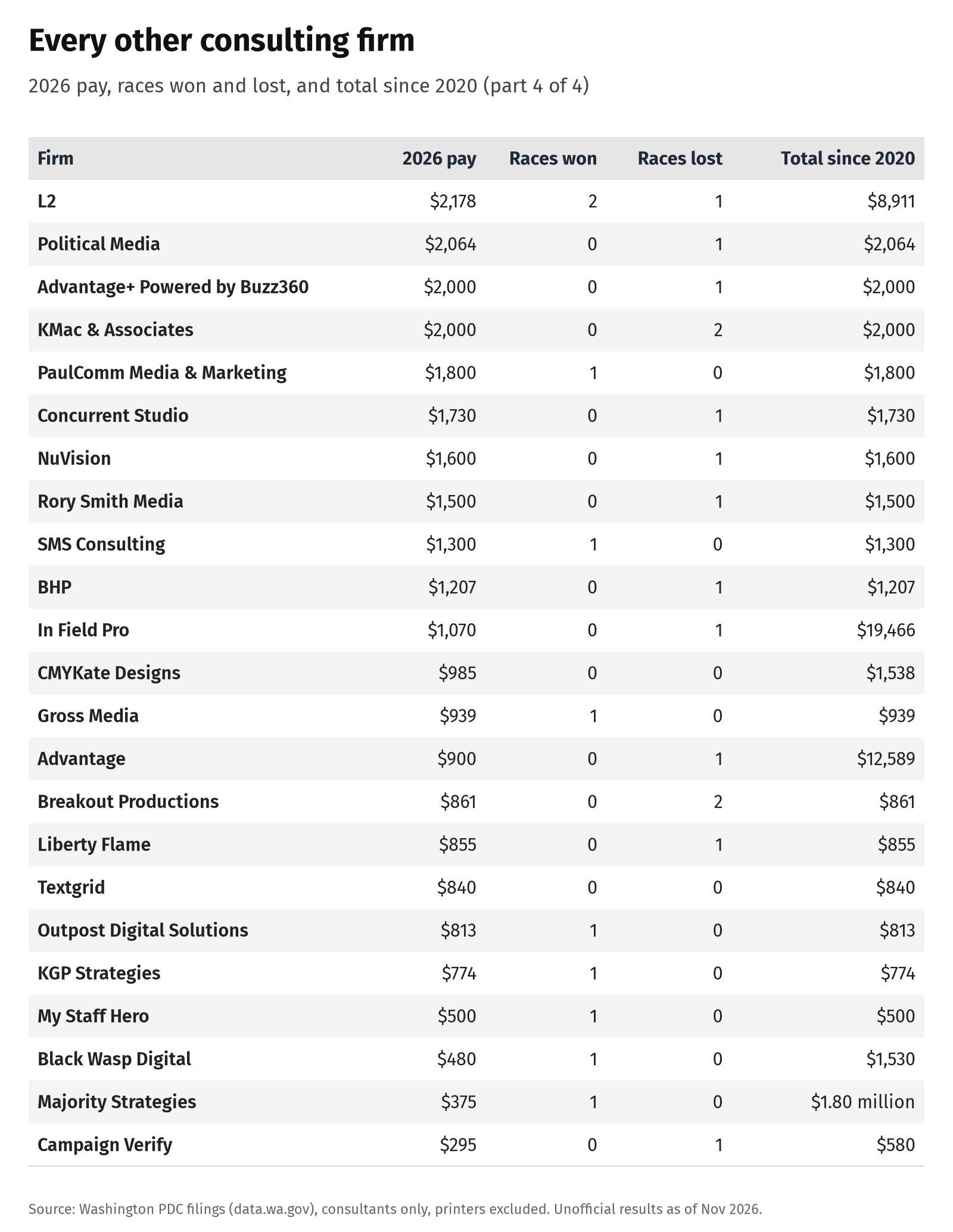
These are the 98 other consulting firms paid by Republican state legislative campaigns and our caucus committees in 2026, after the 21 firms listed above. They were paid $1.59 million in all. Races won and lost count the 2026 November state legislative races each firm was paid on. A firm with no races won or lost was paid only by a primary campaign or by a caucus committee for work that names no race.
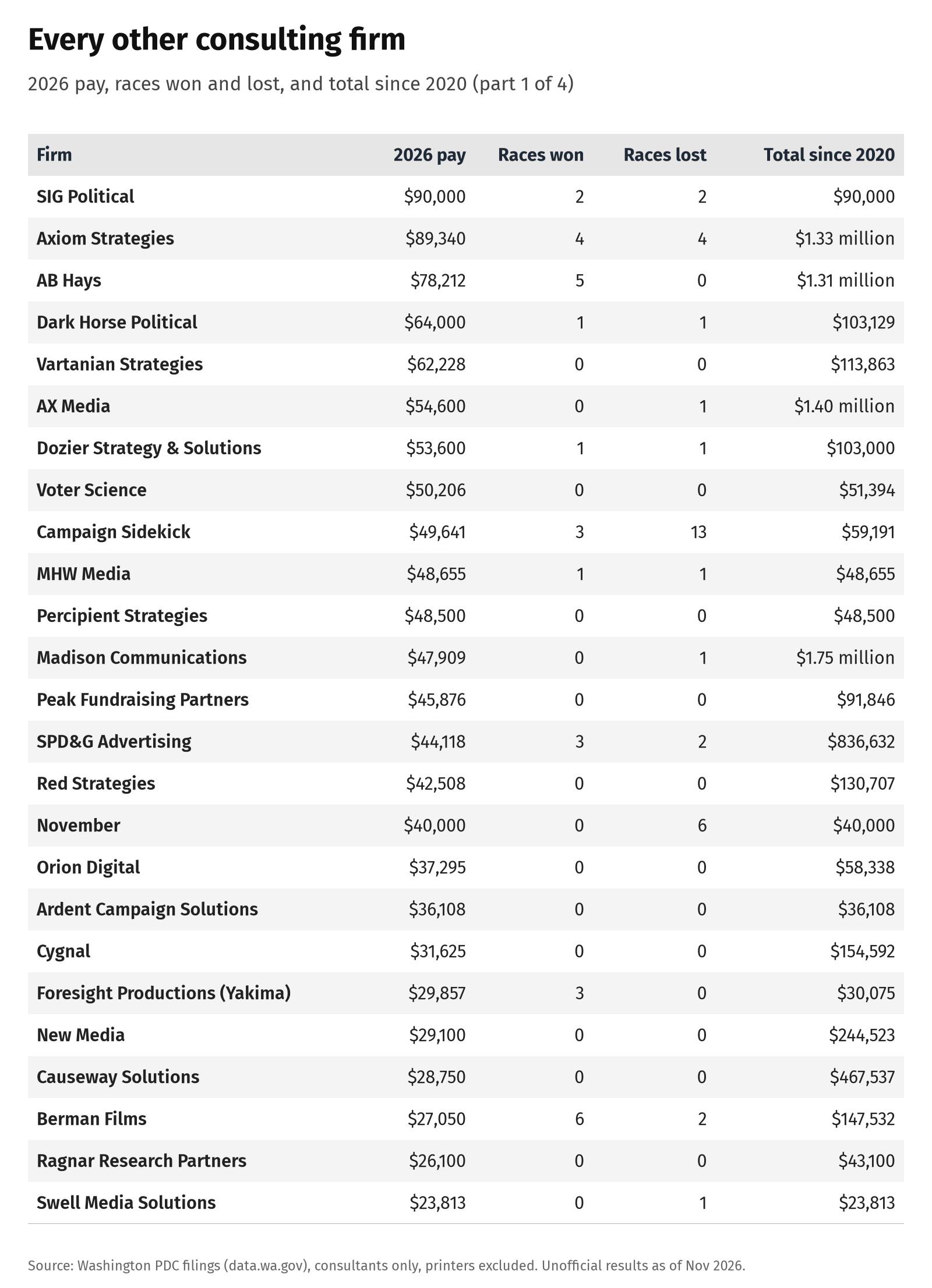
Appendix table, part 1 of 4: 25 firms, sorted by 2026 pay.
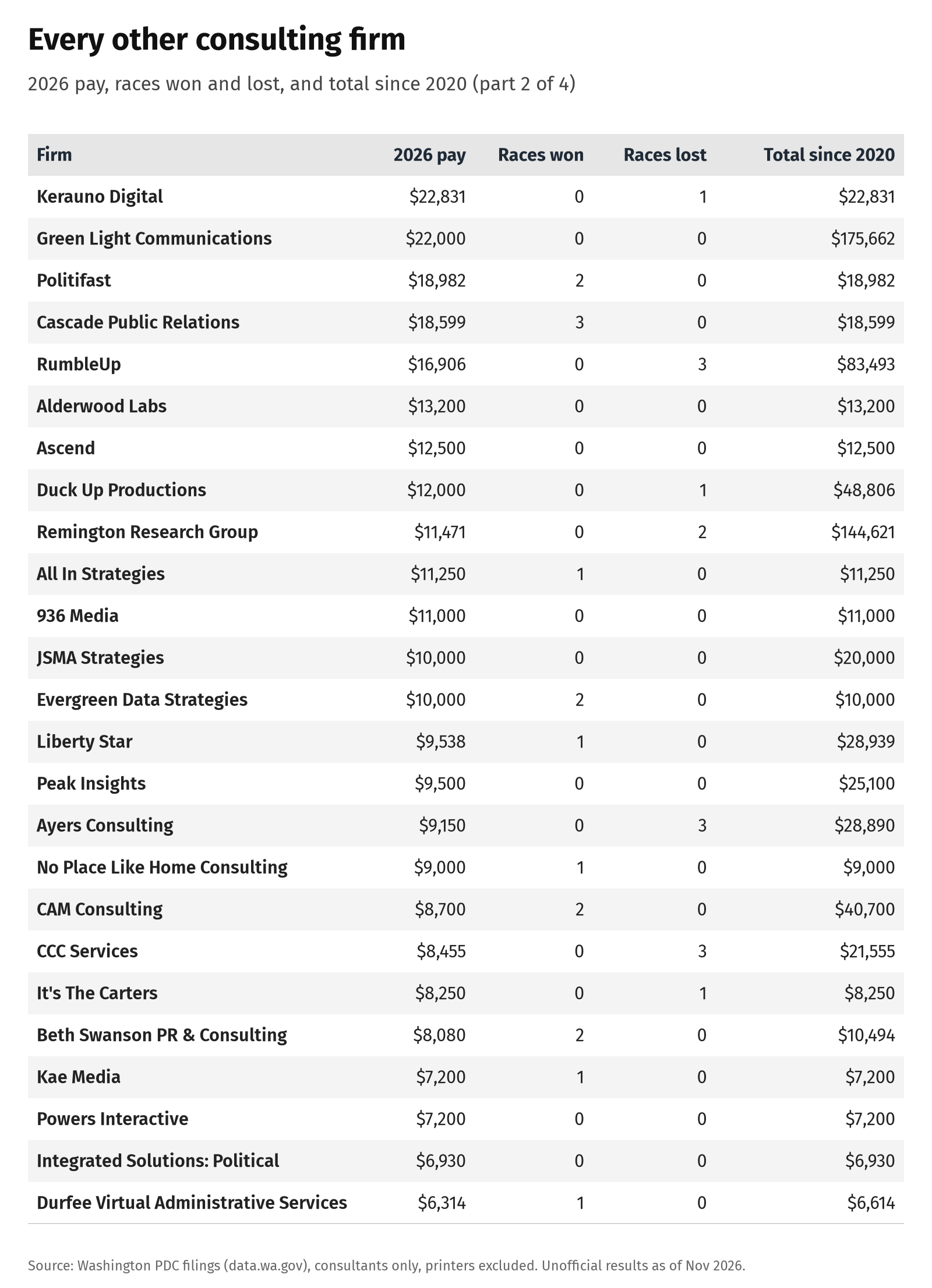
Appendix table, part 2 of 4: 25 firms, sorted by 2026 pay.
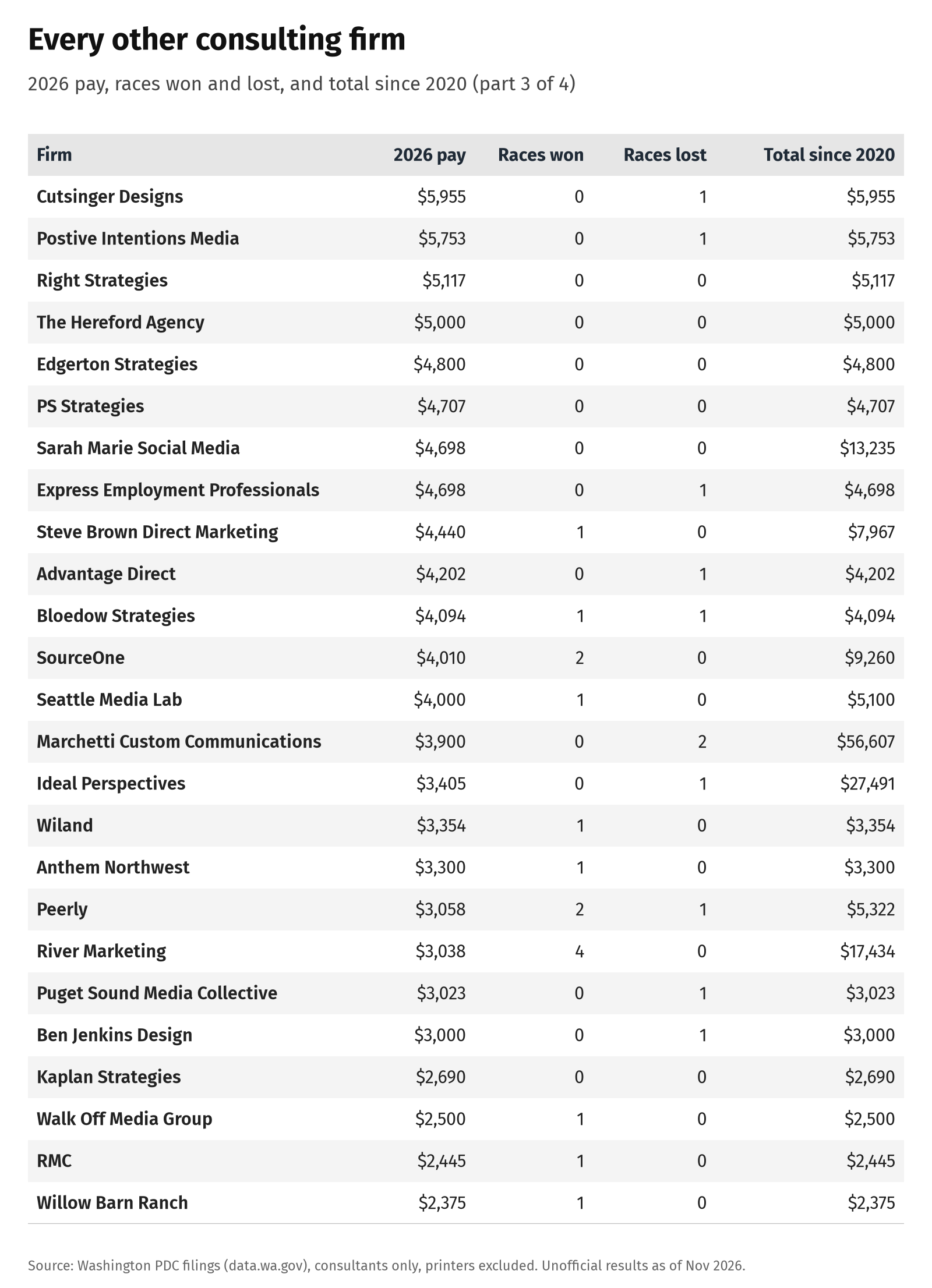
Appendix table, part 3 of 4: 25 firms, sorted by 2026 pay.